Teen curfews: A parent’s guide to setting healthy boundaries
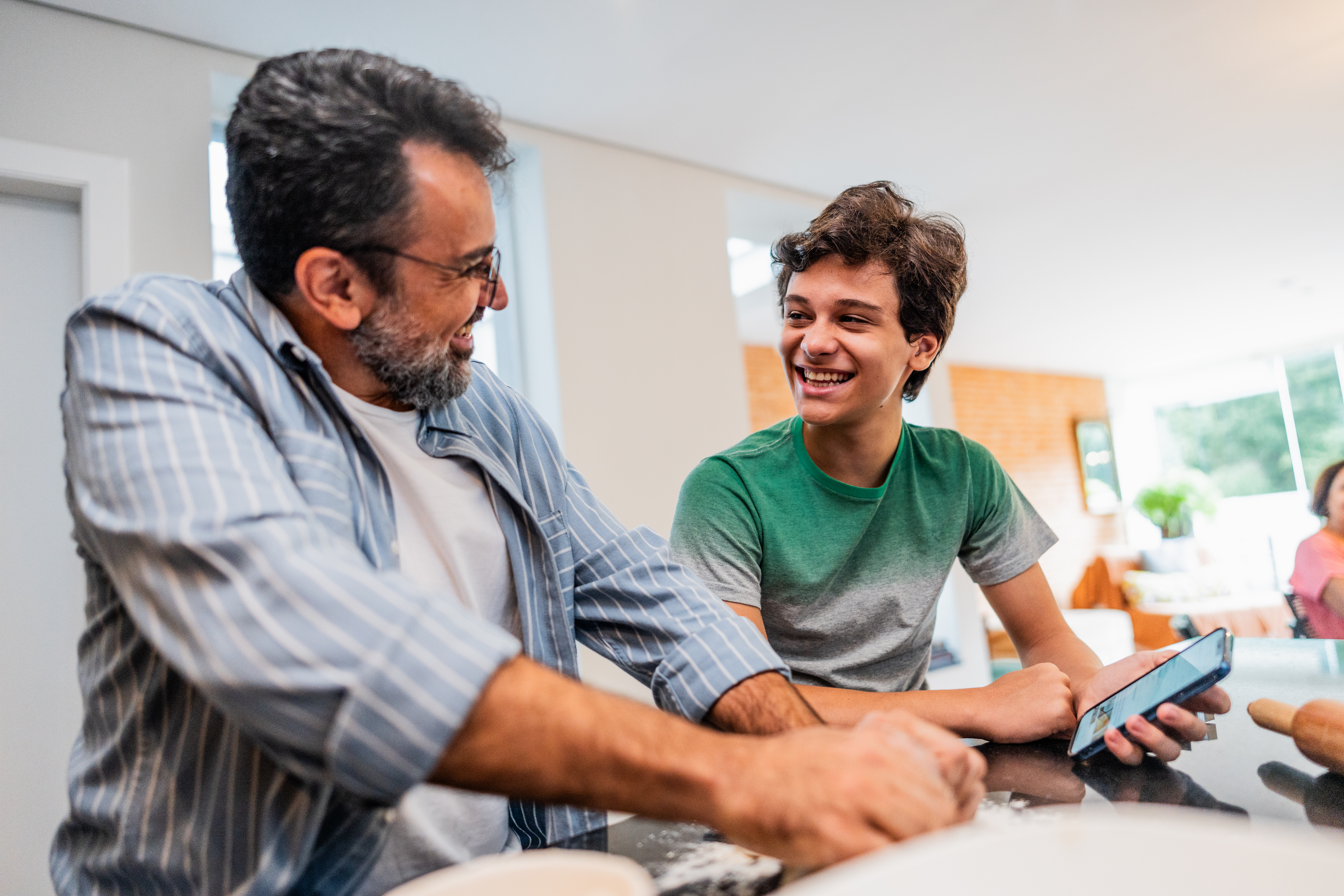
As students embark on the new school year and calendars quickly fill with football games, part-time jobs and late-night study sessions, many parents find themselves asking the same question: What time should my teen be home?
While curfews can sometimes become a source of family tension, David Cook, LMFT, clinical manager of the ASPIRE and Young Adult Mental Health Programs at Hoag, shares practical guidance to help families establish curfews that encourage responsibility, build trust, and keep teens safe during a time of growing independence.
How do you advise patients when it comes to curfews?
I encourage parents to think of curfews as a safety tool, not a punishment. A curfew isn't simply about what time a teen comes home. It's an opportunity to communicate expectations, build trust and teach responsibility. The conversation is often more important than the exact hour.
As children mature, curfews should evolve based on their age, judgment, reliability and the specific activity. A responsible 16-year-old going to a school event may warrant more flexibility than a 16-year-old with a history of breaking rules or poor decision-making.
What are the pros and cons of a curfew?
The biggest advantages are safety, structure and sleep. Adolescents are still developing the parts of the brain responsible for impulse control and risk assessment, so reasonable limits can reduce opportunities for risky behavior while also helping ensure they get enough sleep. Research consistently shows that teens need 8 to 10 hours of sleep each night for healthy emotional, cognitive and physical development.
The downside is that overly rigid or arbitrary curfews can become a source of conflict if teens feel they aren't trusted or if the rules don't account for changing circumstances. The goal is to gradually increase independence while maintaining appropriate supervision.
If parents set a curfew, should they be very strict or is flexibility warranted under certain conditions?
Consistency is important, but so is flexibility. Parents should have a predictable baseline curfew while recognizing that special occasions, such as school dances, sporting events, family celebrations or work schedules, may justify exceptions.
Flexibility works best when it's earned rather than expected. If a teen has demonstrated responsibility by communicating, following family rules and coming home on time, occasional adjustments can reinforce trust. The key is that exceptions should be discussed beforehand, not negotiated after the curfew has already been missed.
What should parents consider when setting a curfew?
Parents should think beyond age alone. Important factors include:
The teen's maturity and track record.
Where they're going and who they'll be with.
Whether there will be responsible adult supervision.
Transportation plans, including whether the teen is driving.
The following day's obligations, such as school, work or sports.
Local neighborhood and community safety.
One of the most protective factors isn't the exact curfew time but knowing where your teen is, who they're with and maintaining open communication. Effective parental monitoring has consistently been associated with lower rates of substance use and other risky behaviors.
Is there a general time that you think is reasonable? Perhaps by age?
There's no evidence-based chart that fits every family, but these are reasonable starting points:
Ages 12-13: Around 8:30 to 9:30 p.m. for most social activities.
Ages 14-15: Around 9:30 to 10:30 p.m., depending on the event.
Ages 16-17: Around 10:30 p.m. to midnight on weekends, with earlier times on school nights.
Older teens: Curfews should increasingly reflect their growing independence while still considering sleep, safety and responsibilities.
Rather than focusing only on the clock, I encourage parents to ask, "Will my teen still be able to get enough sleep and function well tomorrow?" That's often the more important question.
Are kids who don't have a curfew in any additional or special danger?
Not necessarily. The absence of a formal curfew doesn't automatically mean a teen is at greater risk. What matters is whether there are clear expectations, healthy communication and appropriate parental involvement.
That said, adolescents with little supervision or unclear boundaries tend to be more vulnerable to risky behaviors. A family that doesn't use a formal curfew but stays closely connected and knows where their teen is may be providing more effective guidance than a family with a strict curfew that's rarely enforced.
How can parents handle the situation where their child does or does not have a curfew and their friends follow different rules?
Parents hear "but everyone else gets to stay out later" almost universally.
I recommend acknowledging that different families have different values and comfort levels. Instead of criticizing another family's rules, explain your own. For example: "Our job is to make decisions based on what we think is safest and healthiest for you."
It's also worth listening. If your teen makes a thoughtful case for a later curfew, that's an opportunity to negotiate responsibly rather than dismiss the conversation. Adolescence is a time to practice problem-solving and independence, not simply obedience.
Are you aware of any studies regarding curfews?
There isn't strong evidence that a specific curfew time, such as 10 p.m. versus 11 p.m., independently determines outcomes. Instead, research points to the broader benefits of parental monitoring, communication and trust. Teens whose parents maintain awareness of their activities and communicate clear expectations are generally less likely to engage in substance use, early sexual activity and other risky behaviors.
Research also suggests that maintaining healthy sleep routines, including reasonable weekend bedtimes, is associated with lower rates of depression and risk-taking.
Anything else to add?
One mistake parents sometimes make is thinking the conversation ends when the teen walks out the door. In reality, the most important safety habits are often related to communication.
I encourage families to agree that if plans change, if a ride falls through or if a teen doesn't feel safe, they can call home without fearing immediate punishment. You can always address broken rules the next day. The priority in the moment is getting your child home safely.
Ultimately, the healthiest curfews are the ones that balance growing independence with appropriate parental guidance. The goal isn't to control teenagers. It's to help them develop the judgment they'll eventually use when there is no curfew at all.
Learn more about mental health programs and services at Hoag.
Related Articles
Article
How Hoag Maternal Mental Health supported one family through heartbreak and joy- September 14, 2026 · 4 min read

Discover tools, stories, and guidance shaped by real experiences and shared knowledge.
Stay up-to-date on the latest news from Hoag
By submitting this request, you agree to receive communications from Hoag and accept our Privacy Policy and Terms of Use.