Your Essential Guide to Breast Health: The Importance of Mammograms for Dense Breasts and Implants
When it comes to breast health, knowledge is power. Understanding the benefits of mammograms is crucial, especially if you have dense breast tissue or breast implants. Here’s what you need to know about how these factors influence your screening and what steps the Hoag Breast Center may take to ensure your breast health.
Why Mammograms Matter
Annual screening mammograms are the gold standard for early detection of breast cancer, especially for women aged 40 and older. These low-dose X-ray exams have been proven in numerous studies to save lives. With proper screening, breast cancer is one of the most detectable and treatable cancers, making mammograms the first line of defense for most women.
“The goal of a screening mammogram is to find cancer at an early stage so it can be treated promptly,” says Dr. January Lopez, medical director of breast imaging at Hoag’s Breast Center. Early detection increases your treatment options significantly; when breast cancer is identified early, the national 10-year relative survival rate exceeds 90%.
Understanding Dense Breasts and/or Breast Implants and the Potential Need for Extra Screening
Although mammograms remain the standard of care for breast cancer screening, some cancers may not be visible on mammograms, often because they are hidden by areas of dense breast tissue or breast implants. If you have dense breast tissue, your mammogram might require additional screening methods to ensure all breast tissue is thoroughly evaluated. Here are some options your doctor may recommend:
Breast ultrasound examination is a non-invasive, radiation free breast imaging tool that uses high-frequency sound waves to create images of the breast. A breast ultrasound may be ordered by your physician or recommended by your radiologist either for more thorough screening, or to obtain more information about a possible abnormality. Breast ultrasounds are frequently done to assess the characteristics of a lump.
Breast Tomosynthesis (3D Mammography):
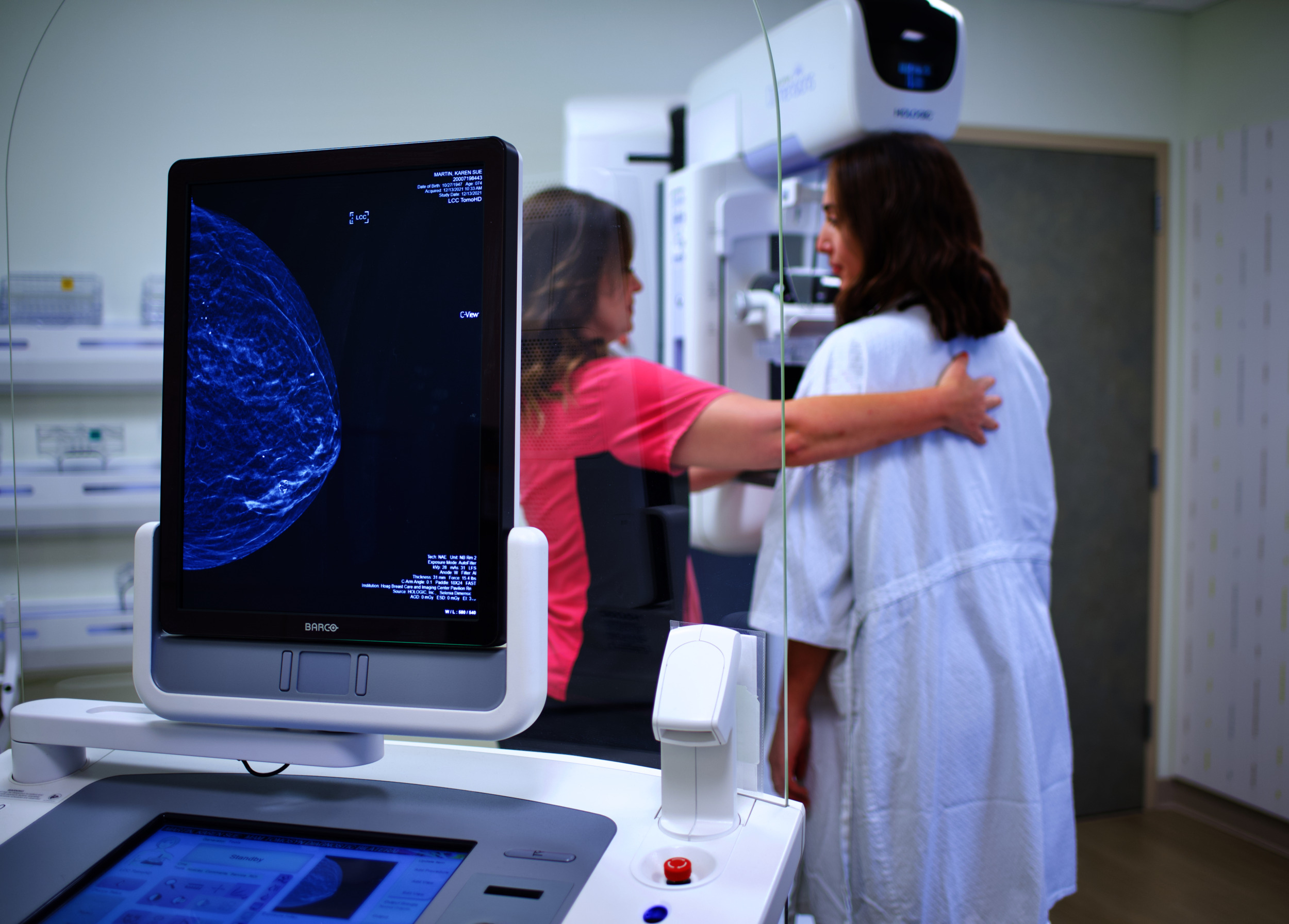
Breast tomosynthesis (3D mammography) was specifically designed to address the limitations of conventional 2D mammography and can be especially beneficial for women with dense breasts. Breast tomosynthesis can be thought of as a 3D exam since it allows radiologists to examine the breast tissue one layer at a time. Instead of viewing all the complexities of breast tissue in a single flat image, the radiologists can examine the tissue millimeters at a time. Fine details become more visible and are no longer hidden by superimposed breast tissue. All Hoag breast imaging sites are equipped with the most advanced, highest resolution 3D mammography technology available today, coupled with AI powered image optimizing software.
Breast MRI is a noninvasive test that uses a magnetic field coupled with an injection of intravenous dye to look at the blood flow patterns of the breasts. Breast MRI is painless, takes about 30 minutes and does not involve exposure to radiation. Because breast MRI targets breast cancer detection from a different approach, this technology can be powerful for unmasking some breast cancers before they are visible on mammograms. This exam is also used to check for leakage or rupture of breast implants.
For women with breast implants, concerns about the pressure during a mammogram are common. In order to optimize your exam, your expert technologist will adjust the implant during the procedure acquiring full coverage images with minimal pressure, then carefully displacing the implant to acquire more detailed compression views of the tissue in front of the implant.
When scheduling your mammogram, be sure to inform the Breast Center team about your breast implants so they can prepare accordingly. This will help make your experience smoother and more comfortable.
“Scheduling that first mammography appointment can be daunting, especially for women with implants or dense breast tissue. But remember, staying proactive about breast cancer is essential,” Dr. Lopez emphasizes. “The earlier a woman is diagnosed, the better her prognosis. Mammography remains the most effective method for diagnosis.”
Schedule your mammogram and take a proactive step toward a healthier future!